
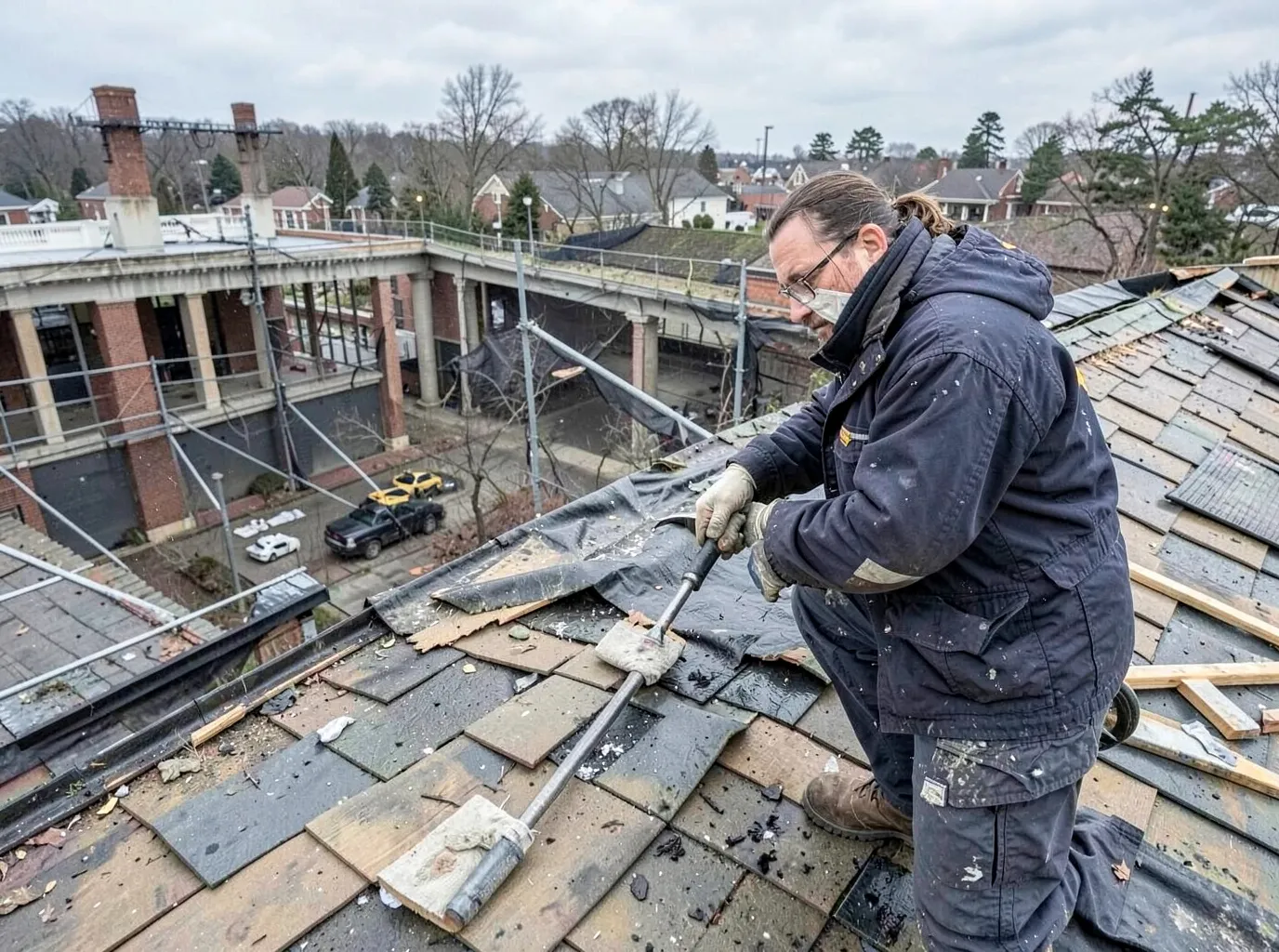
Skokie sits in a four-season humid continental climate shaped by Lake Michigan, where spring and summer storms bring high winds and heavy rain that drive water under older asphalt shingles and flashing on homes built in the 1950s through 1970s. In neighborhoods such as Devonshire and East Prairie, tree cover and narrow lots often funnel wind around chimneys and valleys, creating edge-case leaks that show up days after the storm passes. Cook County permitting rules require matching existing roofing materials on visible repairs, so crews must source the same weight shingles rather than defaulting to modern substitutes that can void neighbor association guidelines near Old Orchard Shopping Center.
Wind-driven rain frequently lifts corners on ridge vents and turbine vents common in West Skokie ranches, allowing water to pool in attics before it reaches interior ceilings. Technicians check for hidden deck rot by probing from the attic side rather than relying solely on exterior inspection, especially after straight-line winds that hit Morton Grove and Lincolnwood borders. Ice damming from winter lake-effect snow adds another layer; meltwater backs up under eaves on east-facing slopes, so storm repairs often include adding ice-and-water shield along the lower four feet even when the original damage was wind-related.
Homeowners in Downtown Skokie sometimes discover that municipal code now requires upgraded ridge ventilation when more than 25 percent of a roof plane is replaced after storm claims. Crews document existing ventilation before work begins to keep projects compliant without triggering full re-roof mandates. Temporary tarping uses weighted battens rather than nails in older cedar-shake homes near the Skokie Northshore Sculpture Park to avoid splitting brittle wood during high-wind forecasts.
Technician insight
In Skokie, the thing that catches most people out with Storm Damage Roof Repair is how Lake Michigan winds push water sideways under ridge vents on 1960s ranches in West Skokie and East Prairie; homeowners focus on obvious shingle tears while the real leak travels along the decking and shows up weeks later in the attic.
Devonshire Wind-Driven Leak
A ranch in Devonshire showed ceiling stains two days after a spring storm. Inspection found lifted ridge vent allowing water to travel under the decking along the east slope. Crew replaced the vent, added ice-and-water shield at the ridge, and sealed adjacent flashing. No further leaks appeared after the next heavy rain.
Storm Damage Roof Repair Services We Offer
✓Wind Uplift Shingle Replacement
Re-secures or replaces shingles lifted by straight-line winds common along Lake Michigan corridors in Skokie and Evanston.
✓Hail Impact Repair
Identifies and patches granular loss and fractures on asphalt shingles after hail events that reach Cook County neighborhoods.
✓Post-Storm Leak Detection
Uses attic inspection and moisture meters to trace water entry points created by wind-driven rain in older Devonshire homes.
✓Flashing and Valley Restoration
Replaces damaged step flashing and valley metal bent by high winds near Old Orchard and Downtown Skokie properties.
✓Ridge Vent and Turbine Repair
Reattaches or swaps wind-damaged ridge vents and turbines on ranches in West Skokie and East Prairie.
Storm Damage Roof Repair Cost in Skokie, IL
| Service | Typical Range | What Affects It |
|---|---|---|
| Wind-lifted shingle section repair | $350–$850 | Varies by roof pitch and access in tree-lined West Skokie lots. |
| Hail damage patch on one slope | $600–$1,200 | Depends on number of impacts and whether ridge work is needed. |
| Flashing and valley restoration | $450–$950 | Higher on older homes with multiple valleys near Devonshire. |
| Ridge vent reattachment after wind | $275–$550 | Includes new sealant and fasteners for Lake Michigan wind exposure. |
Ranges are typical for Skokie, IL and confirmed with an exact written quote before any work starts.
How it works
- 1
Initial Site Assessment
Technician inspects exterior and attic for wind or hail damage while noting ventilation and flashing conditions typical of Skokie housing stock.
- 2
Temporary Weather Protection
Installs weighted tarps or reinforced underlayment to secure the roof against follow-on Lake Michigan storms before permanent work begins.
- 3
Material Matching And Repair
Sources matching shingles and flashing, then completes targeted replacements while following Cook County visible-repair guidelines.
- 4
Final Leak Test And Documentation
Performs water testing and provides photos for insurance or homeowner records before removing equipment.
Pricing
Upfront quotes given during Mon–Fri 8am–6pm or Sat 9am–2pm visits from our Skokie base.